
What Airlines Are Looking For
Not Just a Uniform: What It Really Takes to Become Cabin Crew
A few weeks ago, a senior leader with 25 years of experience in managing high-performing international teams shared something on LinkedIn that stopped many of his connections mid-scroll. He had just returned from an evacuation flight out of Bahrain – an unplanned, high-stakes operation involving an eight-hour journey across Saudi Arabia, three hours dealing with the complexities of Saudi immigration, and a crew that had met less than 48 hours earlier.
His observation was straightforward: “It was easy to forget the immense stress and pressure individuals were enduring.”
That sentence tells you almost everything you need to know about what cabin crew actually do.
Let’s be clear about the job
There is a persistent - and, frankly, unhelpful - belief that cabin crew are simply hospitality staff who happen to work at altitude. The travel, the uniform, the glamour: these are the images that spring to mind for many people, and while not entirely inaccurate, they are certainly incomplete.
Cabin crew are not part of the flight crew; the Captain and First Officer are responsible for flying the aircraft. Cabin crew manage the cabin, and under aviation regulations, their primary responsibility is not meal service, but the safety of every individual on board. Food and drinks are secondary. Emergency procedures, evacuation management, security, first aid, and crew resource management always take priority.
On a routine flight, you may never see that side of the role, but it’s always there; every crew member is trained, assessed, and expected to perform to the same standard, regardless of whether it has been a quiet week or an extraordinary one.
The crew on that evacuation flight from Bahrain did not have a quiet week.
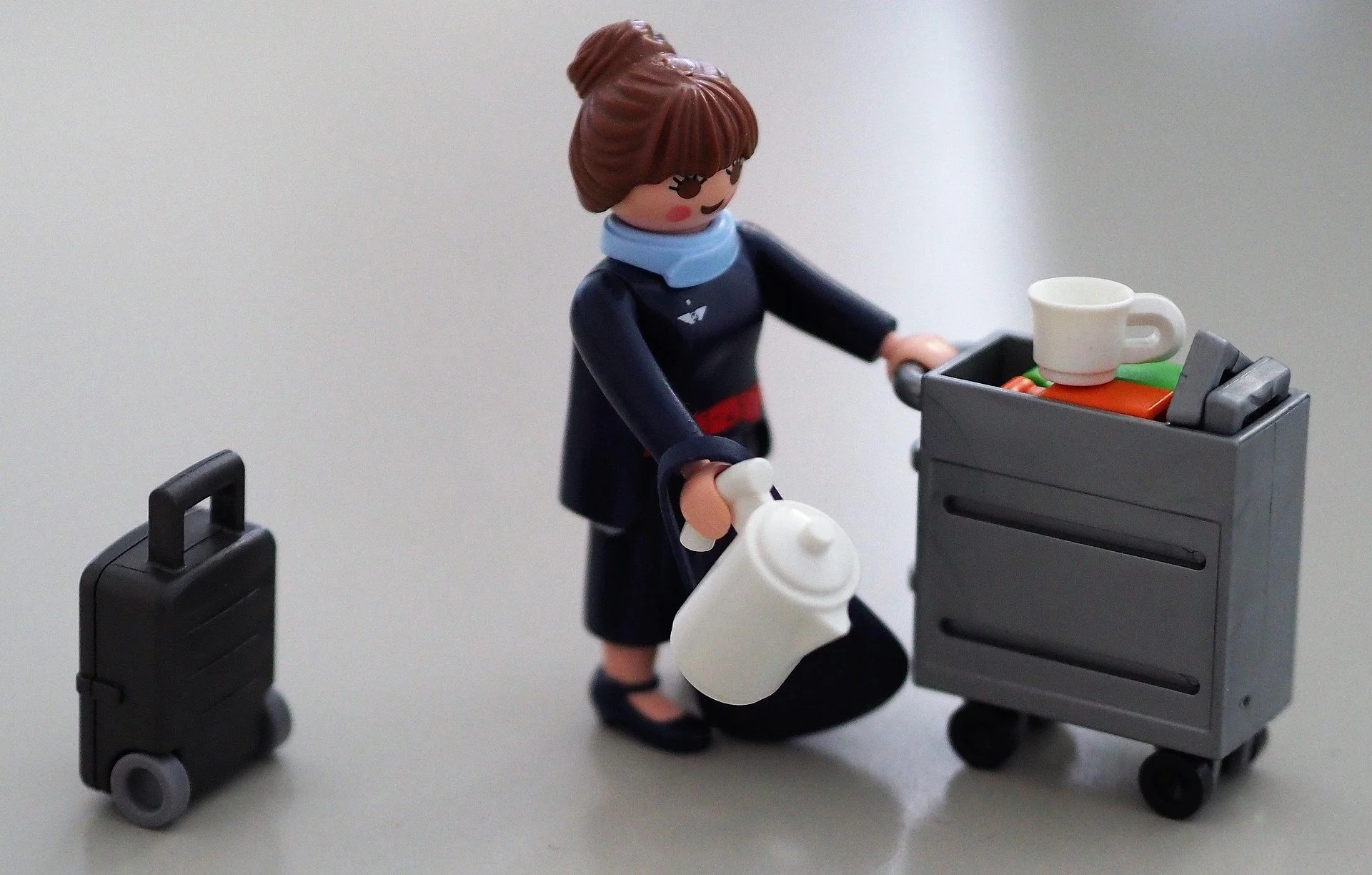
Key Responsibilities of Cabin Crew
Cabin crew are responsible for the safety, security, and comfort of passengers throughout the flight. They provide excellent customer service, manage onboard operations, and respond effectively to emergencies while representing the airline’s brand and values.
Safety & Compliance
Conduct pre-flight safety checks of cabin equipment and emergency systems.
Communicate safety concerns to the cockpit crew.
Demonstrate safety procedures and make sure passengers comply with aviation regulations.
Handle emergency situations (medical incidents, evacuations, turbulence, etc.) according to first aid and safety training.
Maintain awareness of security threats and follow safety procedures at all times.
Customer Service
Welcome passengers, assist with boarding, and help with seating arrangements.
Assist passengers requiring special assistance, such as those with reduced mobility, unaccompanied minors, or passengers with specific needs.
Provide high-quality in-flight service, including meals, drinks, and duty-free sales where applicable.
Address passenger needs, enquiries, and complaints professionally.
Maintain passenger comfort throughout the journey.
Operational Duties
Attend pre-flight briefings and review flight details, special passengers, and service requirements.
Coordinate with fellow crew members and pilots to ensure smooth operations.
Manage onboard documentation and post-flight reporting.
Make sure the cabin is clean and prepared before, during, and after each flight.
Teamwork & Communication
Work collaboratively with multicultural crew teams.
Communicate clearly with passengers and crew, including during high-pressure situations.
Represent the airline brand with professionalism and cultural consideration.
The “Flash Team” Phenomenon
What makes cabin crew truly extraordinary as a professional group is something leadership experts refer to as the “Flash Team” dynamic. Unlike most high-performing teams, cabin crew do not have the luxury of building rapport over weeks or months. They may never have met the colleagues they are working alongside. Yet from the moment they begin a rotation together, they are expected to function as a well-integrated, high-trust unit - immediately and without exception.
This is not simply a matter of being friendly or professional. It requires a shared understanding of priorities, a consistent behavioural framework, and the ability to read and respond to a rapidly changing environment - all whilst maintaining composure and projecting calm to the passengers around them.
The leader who witnessed the Bahrain evacuation described it as “a masterclass in what happens when standard procedure meets an evolving, high-stakes crisis” – a brand-new team functioning under genuine pressure, with “professional grace and genuine empathy”.
That is the job. And that is the standard by which airlines assess when they recruit.
Why so many candidates are rejected - even when qualified
Each year, thousands of applicants meet the basic eligibility criteria for cabin crew roles. Many have prior customer service experience. Most have a reasonable level of English. A significant number have applied more than once. And yet a large proportion are not successful.
In almost every case, the issue is not qualification. It is a fundamental mismatch between what candidates prepare for and what airlines are actually assessing.
Candidates prepare answers. Airlines assess behaviour.
This distinction is significant.
Recruiters are not looking for polished responses to standard questions. They are observing how a candidate communicates under mild pressure, how they interact with strangers in a group setting, how they receive and follow instructions, and whether their natural manner is consistent with the professional standard the airline needs on board.
A well-rehearsed answer delivered without authenticity does not pass that test. In fact, practised responses are often interpreted as a sign of anxiety rather than confidence.
English proficiency is frequently misunderstood.
Many candidates assume they need near-perfect English. They don’t. What airlines prioritise is clarity, simplicity, and natural delivery. A candidate who communicates clearly and confidently in straightforward English will outperform someone who attempts complicated language that reduces, rather than improves, clarity.
Group exercises eliminate strong candidates for the wrong reasons.
The group assessment stage is one of the most misunderstood elements of the selection process. Candidates who dominate the discussion, speak too little, or focus on standing out rather than contributing effectively are regularly eliminated - not because they lack ability, but because they have misread what is being assessed.
Airlines are not recruiting dominant individuals. They are recruiting effective team contributors - people who can function as part of a Flash Team from the moment they step on board.
Confidence is often performed rather than demonstrated.
Talking fast, using unnecessarily advanced vocabulary, and over-rehearsing responses are all common attempts to appear confident. None of them work. Genuine confidence comes across as calm, controlled, and natural. It is demonstrated through appropriate pacing, clear communication, and the ability to engage authentically rather than perform.
What good preparation actually looks like
Effective preparation for cabin crew recruitment is not about memorising answers. It is about understanding the environment you are preparing to enter and developing the genuine capabilities that environment demands.
That means understanding how airlines assess behavioural consistency, not just interview performance. It means developing your English communication so it is clear and natural, rather than technically impressive. It means knowing how group exercises are evaluated and what an effective contribution really looks like in that context. And it means being honest about the nature of the role itself - irregular hours, physical demands, the emotional intelligence required, and the very real possibility that you may one day be the calm voice in a situation that is anything but calm.
The candidates who succeed are not always the most qualified or the most experienced. They are the ones who understand what the job truly requires and who have prepared accordingly.
About The Cabin Crew Training Programme
If you have applied before without success, or if you are preparing to apply for the first time and want to do it properly, this programme is designed to give you the preparation that most candidates never receive.
It covers every stage of the recruitment process - from CV structure and application through to interview technique, group exercise strategy, and professional presentation - with English communication development integrated throughout for candidates who need it.
The goal is not to coach you into performing well at an interview. It is to prepare you to actually do the job.
Have a question about the programme or the recruitment process? Get in touch. yourconsultant@candehrconsultancy.com